Here’s why my new book is important.
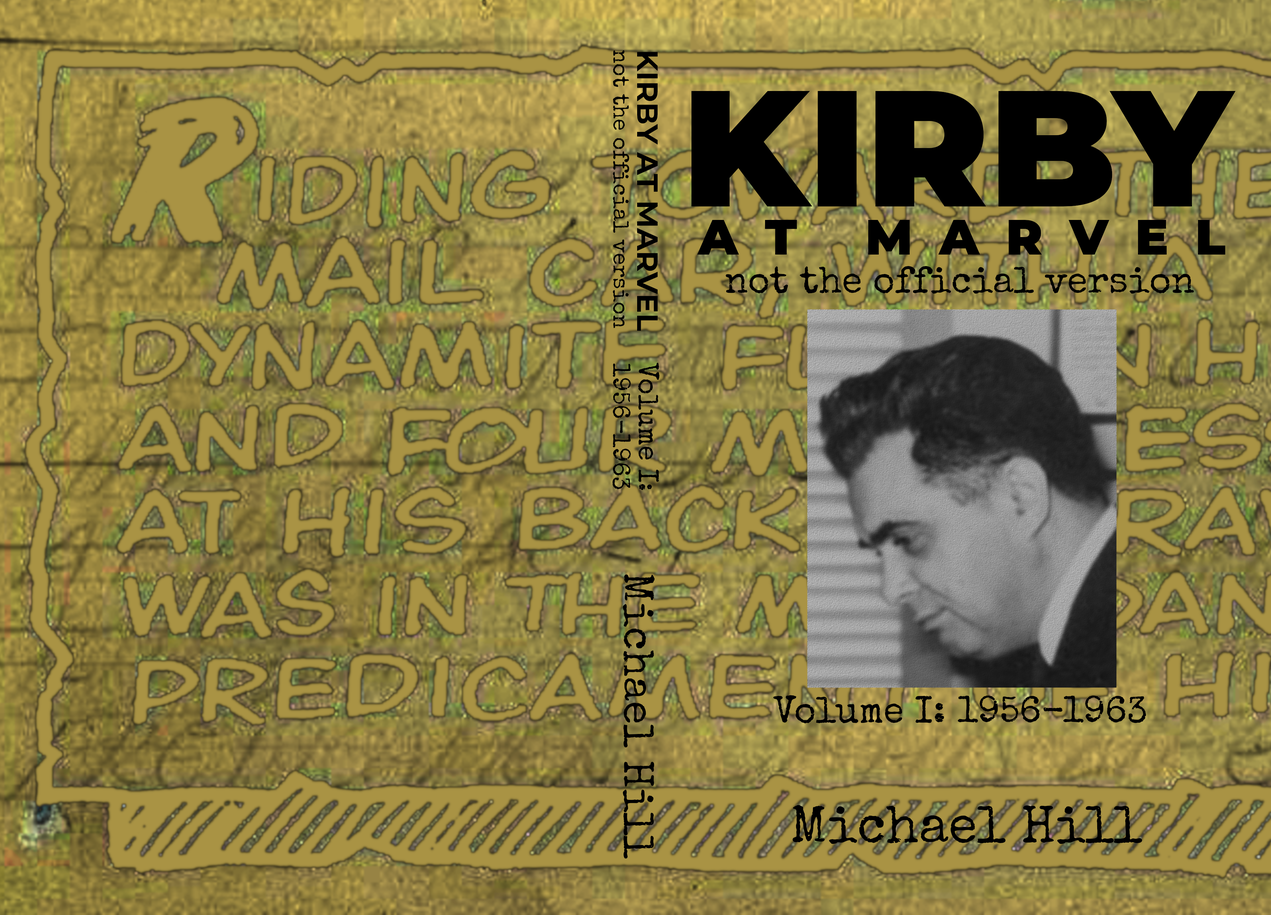
On 16 June 2023, Disney+ released Stan Lee and called it a documentary. The following day, Neal Kirby responded with a statement suggesting that it was “past time to at least get this one chapter of literary/art history right.”
Mark Evanier had some harsh words based on Neal’s statement: “the notion that [Lee] was the primary creator of those properties is utter…what’s the word I’m looking for here? Oh, I know: Bullshit.”
As usual, Evanier was equivocal: he stands by his policy of giving Lee the benefit of the doubt, paving the way for use of any exclusive (and still secret) Lee interviews to be revealed in his someday Kirby biography. “Stan could sometimes be surprisingly fair in his recollections of who did what when there wasn’t a tape recorder running.” A 1983 example proves that like all of Lee’s marks, Evanier would come away from a conversation with Lee believing he alone was told the truth.
One of the MSM pieces on the Kirby statement took the approach that Lee took credit for the wrong things, but let’s not lose sight of what he did achieve (followed by a laundry list of more dubious claims). With his second post on the subject, Evanier rose to the occasion by offering some clarifications, including this telling blow: “Stan, when he was surrounded by cameras and being offered money to sign his name, was just about the happiest human being on this planet.”
Abraham Josephine Riesman, author of True Believer, zeroed in on what makes it so difficult for Jack Kirby to get a fair hearing.
For both the executive high priests and the ordinary worshippers of Marvelism, the gnostic gospel of Stanley Martin Lieber amounts to heresy. Only praise and affection are appropriate for their dead god. This kind of hagiography is, of course, akin to many deeply troubling patterns in recent American politics, ones that hardly need to be listed.
David Brin has some recommendations for dealing with this mindset in what he calls the eighth-plus phase of the Civil War. The Lee camp has been permitted to frame the discussion: Kirby’s words aren’t allowed because he’s been discredited by the biggest liar in comics history. Conversely, Lee’s words are not only allowed, they form the totality of their argument.
As Brin recommends, my book takes the facts-and-evidence based approach. This strategy is not to be used with the dyed-in-the-wool cult member (analogous to his “confederacy-idiocracy”), who shouts down the evidence by saying: both men are dead, leave it alone (the mantra of historians everywhere); or we don’t know, we weren’t there (except for Roy Thomas, who really wasn’t there before 1965, but plays the guy who was there in court cases. His own approach is to be utterly ignorant of the evidence and quote Lee).
After the evidence, then the words. The evidence shows Lee to be a charlatan on every count, but bears out Kirby’s claims, so much that it’s Kirby whose accounts should form the basis of Marvel’s real history. It is for this reason alone that it continues to be suppressed.
With this book, I addressed some criticisms of my first. I took the opportunity to not dissect Stuf Said (or recommend its purchase); “Folksy-to-a-fault Funky” is largely relegated to the endnotes; and the evidence and the timeline are examined, to use Stan Taylor’s words, in deadly earnest.
A draft of the book’s introduction is here, and it can be ordered here.
Endnotes
benefit of the doubt: As with certain other people, the correct approach when citing statements of Lee’s, rather than assuming truth until proven otherwise is to fact check everything.
example: According to Evanier (Comics Interview #2, April 1983), one of the things Lee confided to him was that he’d offered plot credit to Kirby at the same time as Ditko but Kirby declined. “Stan said that simultaneously he offered the same thing to Kirby— to give him a co-writing credit—and Jack, instead, asked that the credits read ‘Produced by Stan Lee and Jack Kirby’ or some variation of that… Jack asked to keep it ambiguous, and Stan went along with it.” Roz Kirby scoffed at the “Produced by” credit in the TCJ interview.
clarifications: Evanier still waffles on the fraudulent purpose of the company that once employed him, Stan Lee Media. Lee started the company with the help of Arthur Lieberman expressly to secure a new Marvel contract after he was fired, using non-court tested rights to the characters he supposedly co-created. Lee’s “then-friend” and co-founder Peter Paul went to prison for fraud while Lee re-signed with Marvel. Further fraud ensued but never stained Lee’s reputation.
eighth-plus: “the mad right’s all-out war to discredit and demoralize the true enemies of world oligarchy. Those enemies are all fact-using professions.”
 accordingtokirby