Lulu.com is terrific, and I will probably continue to use it as a first resort for future books. For an added outlet, I was persuaded recently to try Amazon and with the book written, all that was required was a little editing.
Selling a paperback with Kindle Direct Publishing, I needed a unique version of the book to qualify for a KDP ISBN. With the Lulu First Edition as a base, I removed some of the more conversational endnotes and added a few citations that have come up since I first went to press. Here are the additions…
Chris Tolworthy, author of The Lost Jack Kirby Stories, on who named Fin Fang Foom:
Tolworthy emailed with further indications regarding the name, including: reiterative locution in Chinese literature and the closely related practice of repeating syllables. The name Fin Fang Foom shows evidence of someone who is aware of and respects Chinese culture. Nobody is claiming that Kirby was actually Chinese of course. But giving that name to a creature with fins, fangs and who shakes the earth (like Fuzanlong, the famous underground dragon who guards wealth, often seen in Chinese parades with a pearl in its mouth) shows creativity, a sense of fun and respect for the original culture. Those are three elements that never appear together in Lee’s writing, but always appear in Kirby’s.
—Chris Tolworthy, private email to the author, 16 May 2023.
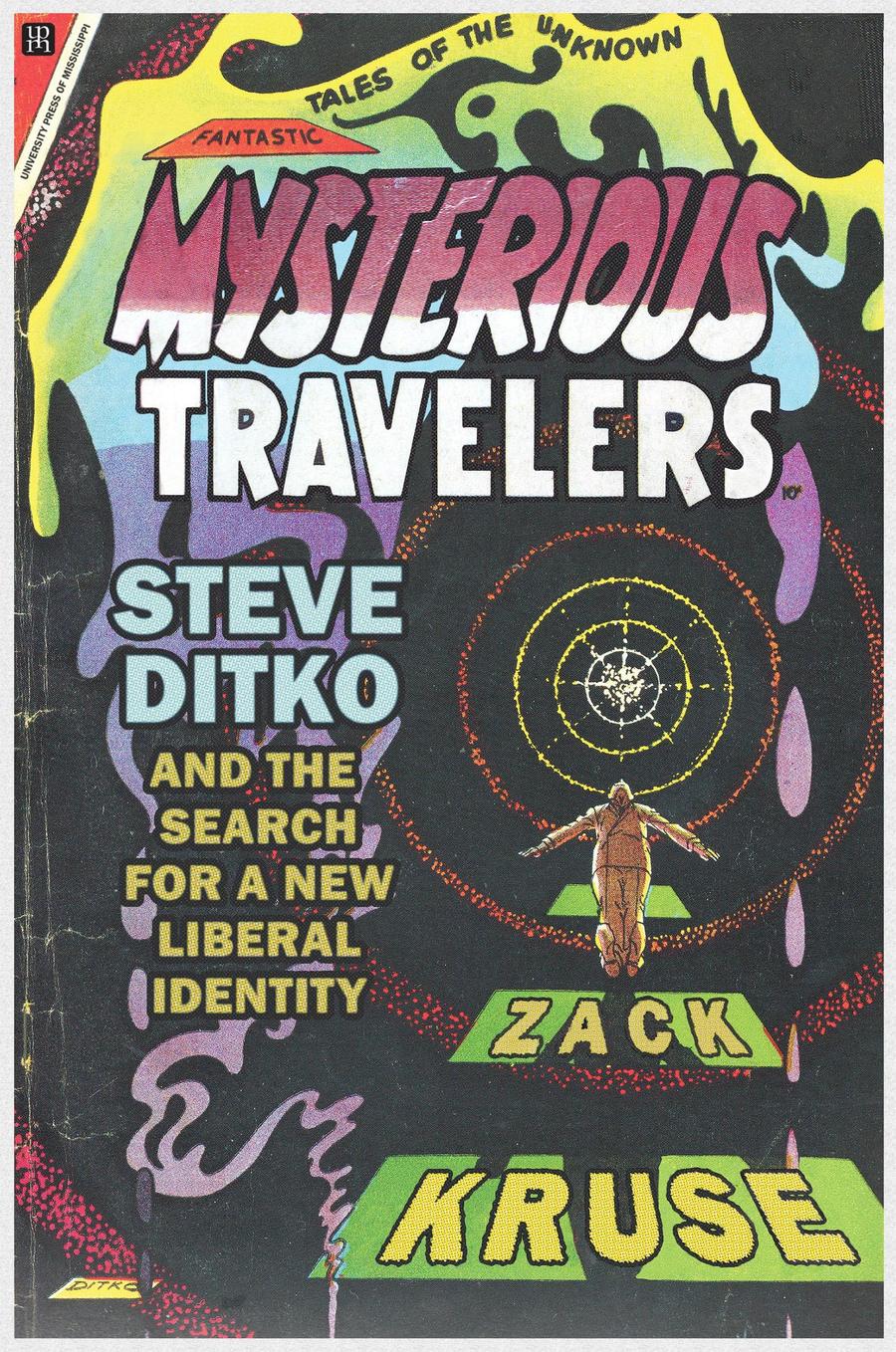 Zack Kruse, from his book Mysterious Travelers: Steve Ditko and the Search for a New Liberal Identity, regarding Stan Lee:
Stan Lee has claimed that it was he who first introduced Ditko to [Ayn] Rand, and this version of events goes unchallenged in Blake Bell’s unauthorized Ditko biography Strange and Stranger. However, anyone even mildly familiar with Lee’s self-aggrandizing and hagiographic approach to his own life knows to take this account with more than a grain of salt: maybe it’s true; most likely it’s not, or its credibility is at least strained.
…and on Ditko’s initial portrayal of Dr. Strange as Asian (specifically Tibetan):
Zack Kruse shows that Ditko created Strange to be Asian, with an Asian supporting cast. Dr. Strange’s Anglicized first name, Stephen, was an invention of Stan Lee’s and was not introduced until Strange Tales #115, which presents the character’s origin. Incidentally, this also came at a point when Stan Lee had taken more of an interest and stake in the character’s development… In fact, Lee’s origin for Dr. Strange draws directly from the Dr. Droom origin, but it inverts the race switching, masking Ditko’s Asian Dr. Strange with the white Stephen Strange: a doctor who travels to the mystic East and is then enlisted by an ancient master.
In addition, I was challenged online recently over the “accusation” that John Morrow and Charles Hatfield, against all evidence, cleave to the conventional wisdom that Stan Lee was the primary plotter for Kirby and others in the early 1960s. Where did I get that crazy idea? I added citations:
As the 1960s wore on, Jack was doing more of the work, via the “Marvel Method,” where the “artist” was responsible for much/most/all of the plotting and pacing of the stories, while the “writer” concentrated on the words in the caption boxes and balloons, after the drawn pages were completed and the story totally fleshed out.—John Morrow, Stuf Said.
It would be an exaggeration to credit Kirby with full authorship of his work at Marvel… Lee’s presence was sustaining, generative, and overwhelming; his verbal swagger and editorial cunning were definitive to Marvel, and documentary evidence suggests he was, early on, both Kirby’s guide and active collaborator in envisioning such properties as The Fantastic Four.
—Charles Hatfield, Hand of Fire.
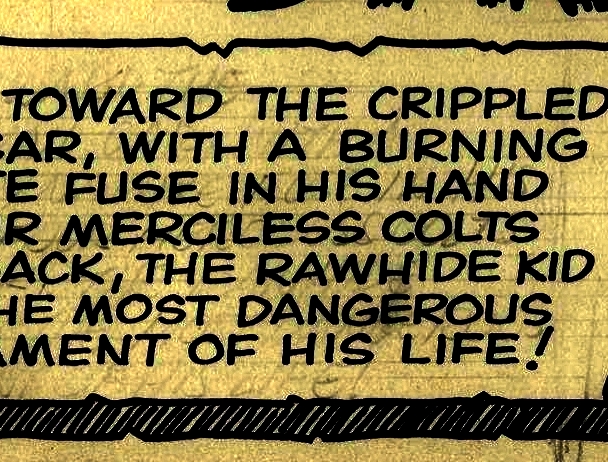
A suggestion was made that I add some imagery to illustrate Kirby’s writing. I was reluctant to do this in a greyscale-printed book because most of the adjustment required to expose Kirby’s pencilled lettering is lost. I attempted it anyway: hopefully as printed enough of the pencils are visible.
The worst image to try to reproduce was the Rawhide Kid #18 caption I used for the cover background. It started as a low res scan from Heritage on which Ferran Delgado performed his magic. It needed to be reduced in size to fit the page and I couldn’t find a good conversion that didn’t result in total pixellation. In the end it seemed to work just to crop it.
 I added the images as Appendix I, which can be downloaded here. Appendix II is the collection of quotes (including endnotes) regarding Kirby’s writing that formerly ended the Introduction. If you have the Lulu edition, you already have those.
 accordingtokirby